Introduction:
Why Floods Hit Texas So Hard (Texas Floods)
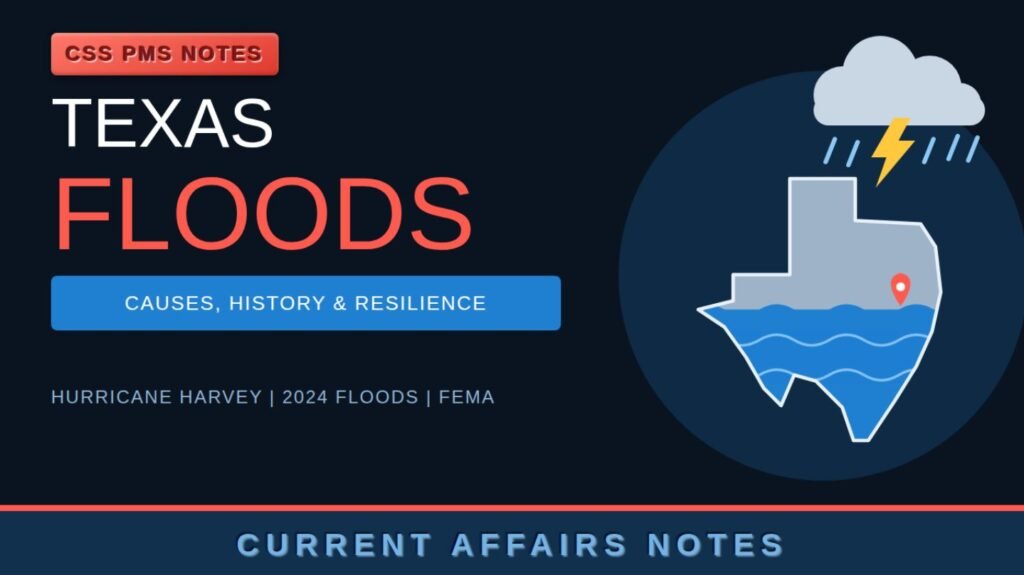
Texas floods are among the most frequent and destructive natural disasters in the United States. From urban centers like Houston to rural riverbanks, the state experiences devastating flooding nearly every year. The causes are both natural and man-made, ranging from intense storms and hurricanes to poor drainage and rapid urbanization. In this guide, we look at why the problem keeps getting worse, what history tells us, and what Texas must do to build lasting resilience.
What Causes Floods in Texas?
Texas is flood-prone for several reasons:
1. Heavy Rainfall & Thunderstorms
Spring and fall bring powerful thunderstorms. Some storms release several inches of rain in a few hours, overwhelming the land and drainage systems.
2. Hurricanes and Tropical Storms
Storms from the Gulf of Mexico like Hurricane Harvey bring massive rainfall that floods entire regions.
3. Urban Development
Concrete jungles in cities like Houston reduce natural water absorption, leading to urban flooding.
4. Flat Terrain
Much of Texas, especially in the east, is flat. Water doesn’t flow away quickly, creating standing floods.
5. River Overflows
Rivers like the Trinity, Brazos, and San Jacinto easily spill over during rain events.
Why Is Texas Flood-Prone? A Perfect Storm
Texas has a unique mix of climate, geography, and urban design problems:
| Factor | Role in Flooding |
|---|---|
| Subtropical Climate | Frequent storms and hurricanes |
| Urban Sprawl | Impervious surfaces prevent natural absorption |
| Poor Drainage | Outdated systems can’t handle heavy rain |
| River Basins | Limited capacity during extreme weather |
Case Study: Hurricane Harvey (2017)
Hurricane Harvey is a landmark event in Texas flood history.
- 🌀 Category 4 hurricane
- 🌧️ Dropped over 60 inches of rain in some areas
- 🏚️ Damaged or destroyed 300,000+ buildings
- 💰 Cost the U.S. $125 billion
- ⚰️ More than 100 fatalities
Harvey exposed how vulnerable Texas is—not just to hurricanes but also to urban mismanagement and poor flood planning.
Major Floods in Texas: A Timeline
| Year | Event | Impact |
|---|---|---|
| 1921 | Central Texas Flood | 215 deaths |
| 1935 | Houston Flood | $3 million in damages (1935 value) |
| 2015 | Memorial Day Floods | 31 deaths, billions in damages |
| 2016 | Central Texas Flooding | Flash floods damaged homes and farms |
| 2017 | Hurricane Harvey | Worst flood in Texas history |
| 2021 | Dallas Flash Floods | Roads submerged, property loss |
| 2024 | South Texas Rainstorms | 32 deaths |
In May and June of 2024, South Texas faced one of its most intense flooding events in recent memory. Triggered by early-season tropical disturbances and weeks of relentless thunderstorms, the floods wreaked havoc across urban and rural landscapes alike. Cities such as Corpus Christi, Brownsville, and McAllen were hit particularly hard, with rainfall exceeding 18 inches in just two days in some areas. The flat terrain of the region, combined with insufficient drainage systems and rapid urban development, contributed to the widespread submersion of roads, homes, and infrastructure.
The humanitarian impact was severe. Over 40,000 residents were displaced, with emergency shelters rapidly filling up. Tragically, 32 lives were lost, and hundreds sustained injuries. Power outages, contaminated water supplies, and healthcare system disruptions worsened the crisis. Despite coordinated efforts by FEMA, state officials, and the National Guard, the floods highlighted persistent weaknesses in Texas’s flood preparedness, particularly in low-income and coastal communities.
The 2024 event serves as a clear signal that climate-resilient infrastructure and early warning systems must be prioritized before the next storm strikes.
Texas Floods 2024 – Key Impact Comparison
| Factor | Texas Floods 2024 | Hurricane Harvey (2017) |
|---|---|---|
| Rainfall | Up to 18 inches in 48 hours | Up to 60 inches over several days |
| Deaths | 32 confirmed | 107+ confirmed |
| Homes Affected | ~28,000 | 300,000+ |
| Estimated Damage | $2.7 billion | $125 billion |
| Displaced People | 40,000+ | 1 million+ |
| Most Affected Area | South Texas (Rio Grande Valley) | Greater Houston Area |
| Cause | Tropical storms + urban flooding | Category 4 hurricane |
| Emergency Response | FEMA + National Guard | FEMA, U.S. Military |
The Real Cost of Flooding in Texas
- Economic damage: Infrastructure, homes, and businesses
- Health risks: Mold, contaminated water, and mosquito-borne illnesses
- Displacement: Thousands lose homes each year
- Psychological toll: PTSD and anxiety are common in survivors
What’s Being Done?
Flood Management Measures
- Reservoirs & Retention Basins: Like Addicks and Barker in Houston
- Harris County Flood Control District
- Bayou Greenways: Nature-based solutions to absorb water
- FEMA flood maps & grants
- Urban Drainage Improvements (though still lagging in some areas)
What’s Still Missing?
- Smart city planning with climate change in mind
- Expansion of flood insurance beyond traditional zones
- Sustainable infrastructure in low-income neighborhoods
Interactive Flood Risk Map (Embed Option for Websites)
Want to know if your area in Texas is flood-prone?
🔗 Click here to access FEMA’s official flood map
Building a Flood-Resilient Texas: What Needs to Change
- Invest in green infrastructure (wetlands, rain gardens, green roofs)
- Better urban zoning laws
- Raise public awareness about flood insurance and emergency prep
- Data-driven early warning systems
Conclusion: A Wake-Up Call for the Lone Star State
Texas floods are not rare — they are regular, deadly, and increasing due to climate change and urbanization. It’s time the state moves from disaster reaction to disaster prevention. Communities, planners, and the government must come together to build a Texas that’s not just strong — but smart, sustainable, and safe from the next storm.