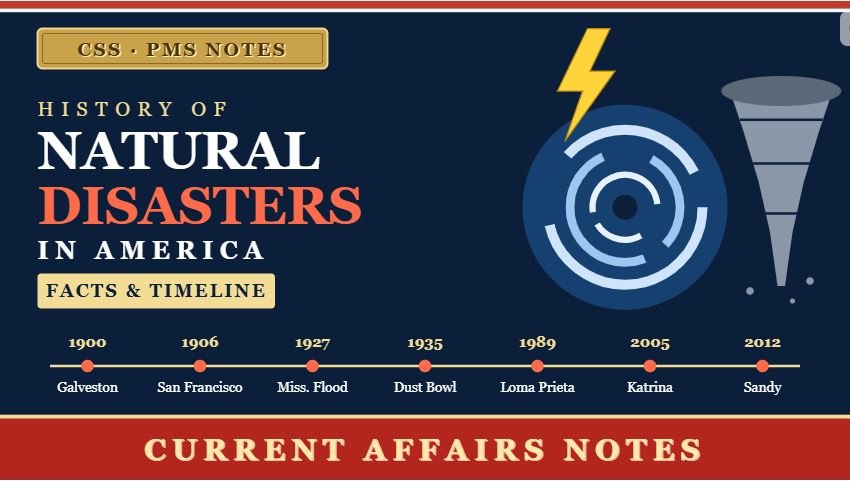
The History of Natural Disasters in America: Timeline, Facts & Figures
The history of natural disasters in America is a story of loss, learning and rebuilding. Floods have washed away whole towns. Hurricanes have flattened cities. Earthquakes and wildfires have burned neighborhoods to the ground. In 2024 alone, the U.S. faced 27 weather and climate disasters that each caused at least $1 billion in damage, according to NOAA.
In this guide, you will find a simple timeline, the deadliest and costliest events, how each disaster changed U.S. laws and buildings, and what you can do to stay safe.
Natural Disasters in America: Key Facts at a Glance
| Fact | Detail |
|---|---|
| Deadliest U.S. natural disaster | 1900 Galveston Hurricane (about 6,000 to 12,000 deaths) |
| Costliest U.S. natural disaster | Hurricane Katrina, 2005 (about $200 billion, adjusted for inflation) |
| Strongest U.S. earthquake | 1964 Alaska earthquake (magnitude 9.2) |
| Deadliest U.S. tornado | 1925 Tri-State Tornado (695 deaths) |
| Deadliest U.S. wildfire | 1871 Peshtigo Fire, Wisconsin (1,200+ deaths) |
| Year FEMA was created | 1979 |
| Billion-dollar disasters in 2024 | 27 events, about $182.7 billion in total damage (NOAA) |
Timeline of Major Natural Disasters in U.S. History
| Year | Disaster | Type | Place | Estimated Deaths | Estimated Cost |
|---|---|---|---|---|---|
| 1755 | Cape Ann Earthquake | Earthquake | Massachusetts | No major death toll recorded | Damaged chimneys and buildings in Boston |
| 1871 | Peshtigo Fire | Wildfire | Wisconsin | 1,200+ | Towns destroyed |
| 1889 | Johnstown Flood | Flood (dam failure) | Pennsylvania | 2,209 | About $17 million at the time |
| 1900 | Galveston Hurricane | Hurricane | Texas | 6,000 to 12,000 | Most of the city destroyed |
| 1906 | San Francisco Earthquake | Earthquake and fire | California | About 3,000 | About 80% of the city destroyed |
| 1925 | Tri-State Tornado | Tornado | Missouri, Illinois, Indiana | 695 | Thousands of homes lost |
| 1927 | Great Mississippi Flood | Flood | Mississippi River states | 200 to 500 (estimates vary) | Hundreds of thousands displaced |
| 1928 | Okeechobee Hurricane | Hurricane | Florida | About 2,500 | Major farm and town losses |
| 1930s | Dust Bowl | Drought and dust storms | Great Plains | Thousands (from dust illnesses) | About 2.5 million people moved away |
| 1964 | Alaska Earthquake | Earthquake | Alaska | 131 | Anchorage and coastal towns damaged |
| 2005 | Hurricane Katrina | Hurricane and flood | Louisiana and Gulf States | About 1,800 | About $200 billion (adjusted) |
| 2012 | Hurricane Sandy | Hurricane | East Coast | 159 | About $75 to $88 billion |
| 2017 | Hurricane Harvey | Hurricane and flood | Texas | 100+ | About $125 to $160 billion |
| 2018 | Camp Fire | Wildfire | California | 85 | Town of Paradise destroyed |
| 2021 | Winter Storm Uri | Extreme cold | Texas | 246 (official Texas count) | Power grid failure |
| 2023 | Maui Wildfires | Wildfire | Hawaii | 102 | About $5.5 billion |
Death tolls and costs for older events are estimates and change by source. Always check NOAA, FEMA, USGS or the National Weather Service for the latest figures.
Deadliest Natural Disasters in U.S. History
| Rank | Disaster | Year | Estimated Deaths |
|---|---|---|---|
| 1 | Galveston Hurricane | 1900 | 6,000 to 12,000 |
| 2 | San Francisco Earthquake | 1906 | About 3,000 |
| 3 | Okeechobee Hurricane | 1928 | About 2,500 |
| 4 | Johnstown Flood | 1889 | 2,209 |
| 5 | Hurricane Katrina | 2005 | About 1,800 |
| 6 | Peshtigo Fire | 1871 | 1,200+ |
Hurricanes and floods cause most of the deadliest events. Heat is also a major killer today, and heatwaves cause thousands of deaths in many years.
Costliest Natural Disasters in U.S. History
| Disaster | Year | Estimated Cost (Inflation-Adjusted) |
|---|---|---|
| Hurricane Katrina | 2005 | About $200 billion |
| Hurricane Harvey | 2017 | About $160 billion |
| Hurricane Maria | 2017 | About $115 billion |
| Hurricane Ian | 2022 | About $113 billion |
| Hurricane Sandy | 2012 | About $88 billion |
Figures are approximate and based on NOAA estimates. Different agencies give slightly different numbers.
Types of Natural Disasters in America
| Type | Where It Happens Most | Famous Example |
|---|---|---|
| Hurricanes | Gulf Coast and Atlantic Coast | Galveston 1900, Katrina 2005 |
| Floods | Nearly every state | Johnstown 1889, Harvey 2017 |
| Wildfires | California, Colorado, Hawaii, Pacific Northwest | Camp Fire 2018, Maui 2023 |
| Earthquakes | California, Alaska, Pacific Northwest, Missouri (New Madrid fault) | San Francisco 1906, Alaska 1964 |
| Tornadoes | Midwest and Southeast (“Tornado Alley”) | Tri-State Tornado 1925 |
| Droughts | Great Plains and the West | Dust Bowl 1930s |
| Extreme cold and heat | Different regions each year | Winter Storm Uri 2021 |
How Natural Disasters Changed America
Every major disaster has led to a change in laws, building rules or city planning.
| Disaster | What Changed |
|---|---|
| 1900 Galveston Hurricane | The city built a seawall and raised the ground level of the city |
| 1906 San Francisco Earthquake | Stronger building and fire safety rules |
| 1927 Mississippi Flood | The Flood Control Act of 1928 and large federal levee projects |
| 1930s Dust Bowl | New Deal farming reforms and the Soil Conservation Service (1935) |
| 1989 Loma Prieta and 1994 Northridge earthquakes | Tougher earthquake building standards in California |
| 2005 Hurricane Katrina | The Post-Katrina Emergency Management Reform Act (2006) |
| 2012 Hurricane Sandy | Billions spent on coastal protection and storm planning |
Is Climate Change Making Disasters Worse?
According to NOAA and the National Climate Assessment, a warming climate is making many disasters stronger and more costly.
- Hurricanes are wetter and often stronger because oceans are warmer.
- Floods are more dangerous because of heavy rain and rising sea levels.
- Wildfires are becoming larger and more destructive in the western U.S.
- Heatwaves are more frequent and cause many deaths each year.
Billion-Dollar Disasters in 2024
| Measure | 2024 Figure (NOAA) |
|---|---|
| Disasters costing $1 billion or more | 27 |
| Total estimated damage | About $182.7 billion |
| Total deaths | About 568 |
Who Helps During a Disaster? FEMA, NOAA and USGS
| Agency | What It Does |
|---|---|
| FEMA (created 1979) | Leads the federal response, gives disaster aid and publishes flood maps |
| NOAA | Tracks hurricanes, storms and drought; issues forecasts and warnings |
| USGS | Monitors earthquakes, volcanoes and landslides; makes hazard maps |
| National Weather Service | Sends tornado, flood and storm alerts |
| Red Cross | Provides shelter, food and relief for victims |
How Are Americans Safer Today?
Lessons from history have made the country safer in several ways:
- Stronger building codes in earthquake and hurricane zones
- Early warning systems for tornadoes, floods and wildfires
- Emergency alert apps and text alerts
- Stricter zoning rules in floodplains and fire-risk areas
- Better evacuation plans for coastal cities
Even so, disasters are growing in cost and size. Stronger buildings, better drainage and climate adaptation are still needed.
How to Prepare for a Natural Disaster: A Simple Checklist
Get ready
- Make a 3-day emergency kit with food, water, a flashlight, batteries and a first aid kit.
- Learn your local hazards and evacuation routes.
- Keep copies of important papers in a waterproof bag.
Protect your home
- Check if you have flood, earthquake or wildfire insurance, because basic policies often do not cover them.
- Use fire-resistant plants and materials in wildfire areas.
- Strengthen windows and roofs in hurricane zones.
Stay informed
- Sign up for local emergency alerts.
- Follow NOAA, FEMA and the National Weather Service during storm and fire seasons.
- Check your area on FEMA’s official flood map.
Frequently Asked Questions
What was the deadliest natural disaster in U.S. history?
The 1900 Galveston Hurricane in Texas. It killed an estimated 6,000 to 12,000 people.
What was the costliest natural disaster in the U.S.?
Hurricane Katrina in 2005, with damage of about $200 billion in today’s dollars.
When was FEMA created?
FEMA was created in 1979, after states struggled to handle large disasters on their own.
What was the strongest earthquake in U.S. history?
The 1964 Alaska earthquake, with a magnitude of 9.2.
What was the deadliest wildfire in U.S. history?
The 1871 Peshtigo Fire in Wisconsin killed at least 1,200 people. The 2023 Maui fire was the deadliest U.S. wildfire in more than 100 years.
Which U.S. states face the most natural disasters?
Texas and California are among the most affected, but the answer depends on the type of disaster.
Are natural disasters increasing in the U.S.?
Billion-dollar disasters have become more common and more costly over the past few decades, due to climate change, population growth and more building in risky areas.
Conclusion: A Nation Built Through Resilience
The history of natural disasters in America shows that every tragedy led to change. Galveston built a seawall. San Francisco rewrote its building rules. Katrina reshaped how the country responds to emergencies. As climate change makes storms, fires and floods more severe, learning from the past is more important than ever. Prepare today, stay informed, and support smart planning in your community.