The Tiny Chip That Runs the World
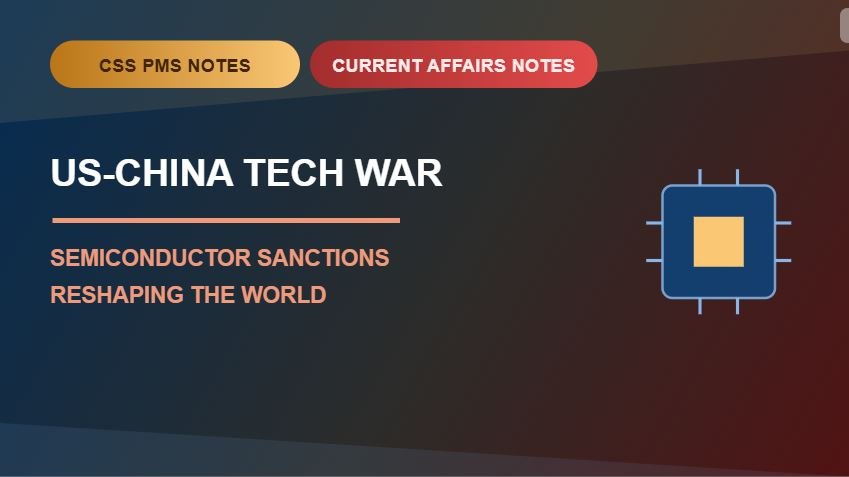
Your phone. Your laptop. Your car. Even modern weapons. All of them depend on one small thing — semiconductor chips. Today, these tiny chips are at the center of a silent but powerful conflict between the United States and China. This is not a war with tanks or missiles. It is a US China Tech War. And it is changing the global economy, supply chains, and future innovation.
What Are Semiconductors? (In Simple Words)
Semiconductors are materials that control the flow of electricity. They are used to make computer chips, also called integrated circuits. These chips power:
- Smartphones
- Computers and servers
- Artificial Intelligence (AI)
- Cars and electric vehicles
- Military and space technology
Because modern life depends on them, semiconductors are often called the oil of the digital age.
Why the US–China Tech War Started
The tech war did not begin overnight. It grew slowly from fear, competition, and power politics.
National Security Concerns
The United States believes advanced chips can help China improve:
- Military systems
- Surveillance technology
- Artificial intelligence
According to reports by BBC and Al Jazeera, Washington fears these technologies could be used against US interests and allies.
Race for Global Tech Dominance
Technology now decides global power.
Whoever leads in:
- AI
- Quantum computing
- Advanced manufacturing
will shape the future world order. This competition pushed semiconductors to the center of US–China rivalry.
What Are US Semiconductor Sanctions?
The US government has placed strict controls on chip-related exports to China. These rules aim to slow China’s access to advanced technology.
Key US Restrictions
| Measure | Purpose |
|---|---|
| Ban on advanced AI chips | Limit China’s AI development |
| Controls on chip-making tools | Stop China from producing cutting-edge chips |
| Restrictions on US experts | Prevent technical support to Chinese firms |
These actions mark a major shift in US tech policy.
How China Is Responding
Instead of backing down, China is pushing forward.
China’s Strategy: Self-Reliance
China is investing heavily in its local chip industry.Key steps include:
- Massive government funding for chip firms
- Building local supply chains
- Reducing reliance on US and Western technology
Reports by international economic analysts show China has invested over $150 billion in its semiconductor sector over the past decade.
Innovation Under Pressure
Sanctions forced China to innovate faster. Local firms are now producing chips that were once imported. While China still lags in the most advanced chips, progress is visible.
Impact on Global Supply Chains
The US–China tech war is not limited to two countries. It affects the entire world.
Major Global Changes
- Companies are moving factories away from China
- Chip production is spreading to new regions
- Costs of electronics are rising
New Manufacturing Hubs
Countries gaining importance include:
- Taiwan
- South Korea
- Japan
- Vietnam and Southeast Asia
This shift is often called supply chain diversification.
Winners and Losers of the Tech War
Every global conflict creates winners and losers.
Winners
- China’s domestic chip companies
- Countries attracting new chip factories
- Governments investing in local tech industries
Losers
- US chip firms losing access to the Chinese market
- Global companies facing higher production costs
- Consumers paying more for tech products
How This Tech War Is Reshaping the World
The world is slowly moving toward tech decoupling.This means:
- Separate technology systems
- Different chip standards
- Divided digital ecosystems
Possible Long-Term Effects
| Trend | Global Impact |
|---|---|
| Local chip production | Less global dependence |
| Higher tech costs | Expensive electronics |
| Political tech blocs | Increased global tension |
According to BBC analysis, this split could slow innovation but increase national control.
What It Means for Developing Countries
For countries like Pakistan and others in the Global South:
- Tech prices may rise
- Access to advanced technology may shrink
- New opportunities may open in manufacturing
This makes tech policy a key issue for future development.
Is This a New Cold War?
Many experts say this is not a military Cold War. But it is clearly a technology Cold War. Instead of weapons, nations compete with:
- Chips
- AI models
- Data control
And the results will shape the next century.
Final Thoughts
The US–China tech war shows one clear truth:
Who controls technology controls the future.
Semiconductor sanctions are not just trade tools. They are strategic weapons. As the world becomes more digital, this chip battle will decide economic power, security, and global leadership. The war may be silent — but its impact is loud and global.
❓ Frequently Asked Questions (FAQs)
1. What is the US–China tech war?
The US–China tech war is a competition over advanced technology, especially semiconductors, AI, and chip manufacturing.
2. Why are semiconductors so important?
Semiconductors power phones, computers, AI systems, and military technology. Modern life depends on them.
3. What are US semiconductor sanctions on China?
These are export controls that limit China’s access to advanced chips and chip-making equipment.
4. How is China responding to chip sanctions?
China is investing heavily in its own chip industry and working toward technology self-reliance.
5. How does this tech war affect the world?
It disrupts global supply chains, raises tech costs, and divides the world into separate technology blocs.
6. Is this a new Cold War?
Not a military one, but many experts call it a technology Cold War due to rising digital rivalry.