
Electoral Reforms in Pakistan: A Complete Guide to Democratic Change
Introduction
Electoral reforms in Pakistan are essential for strengthening democracy, improving governance, and ensuring free and fair elections. Elections give citizens the right to choose their representatives. They also allow people to hold governments accountable through the ballot.
A fair electoral system must be transparent, independent, inclusive, and trustworthy. Every eligible citizen should have an equal opportunity to vote. Political parties must also receive a fair chance to participate in elections.
Pakistan has faced several electoral challenges since independence. These include political interference, allegations of rigging, weak election management, unequal political opportunities, and delays in resolving election disputes.
The Elections Act 2017 introduced important changes to the electoral system. However, further amendments and reforms have remained subjects of political debate. The general elections of February 8, 2024, also highlighted the need to improve transparency, political participation, and the credibility of election results.
Electoral reforms are therefore necessary to strengthen democratic institutions and restore public confidence in Pakistan’s political system.
Table of Contents
- What Are Electoral Reforms?
- Historical Background of Elections in Pakistan
- Election Commission of Pakistan (ECP)
- Major Electoral Reforms Before 2018
- Elections Act 2017
- Electoral Reforms After 2018
- Political Debate Over Electronic Voting Machines
- Electoral Amendments of 2023 and 2024
- General Elections 2024 and Electoral Challenges
- Major Problems in Pakistan’s Electoral System
- Recommendations for Electoral Reforms
- Importance of Electoral Reforms for Democracy
- Frequently Asked Questions
1. What Are Electoral Reforms?
Electoral reforms refer to changes in election laws, policies, procedures, and institutions to improve the quality of elections.
Their main purpose is to ensure that elections are free, fair, transparent, and inclusive.
Electoral reforms generally focus on:
- Improving the independence of election authorities.
- Preventing electoral fraud and manipulation.
- Ensuring equal political opportunities.
- Improving voter registration.
- Protecting the secrecy of votes.
- Increasing women’s political participation.
- Making election results more transparent.
- Resolving election disputes without unnecessary delays.
- Encouraging public participation in the democratic process.
In simple words, electoral reforms aim to make every vote count and ensure that people can freely elect their representatives.
2. Historical Background of Elections in Pakistan
Pakistan’s electoral history has experienced several political and constitutional challenges.
The country held its first general elections in 1970. These elections are widely regarded as a major milestone in Pakistan’s democratic history.
However, the transfer of power did not take place smoothly, which contributed to the political crisis that led to the separation of East Pakistan in 1971.
Subsequent general elections were held in 1977, 1985, 1988, 1990, 1993, 1997, 2002, 2008, 2013, 2018, and 2024.
Pakistan’s electoral history has included periods of civilian rule and military government. Many elections have faced political disputes and allegations of irregularities.
The 2008 elections marked the return to civilian democratic rule after the military government of General Pervez Musharraf. However, political disagreements and concerns about electoral transparency continued.
The general elections of 2013, 2018, and 2024 further highlighted the importance of improving election management and strengthening democratic institutions.
3. Election Commission of Pakistan (ECP)
The Election Commission of Pakistan is the constitutional body responsible for conducting and supervising elections in the country.
It works under the Constitution of Pakistan, 1973.
Constitutional Provisions
Article 218: It provides for the establishment of a permanent Election Commission of Pakistan.
Under Article 218(3), the ECP must make arrangements to ensure that elections are conducted honestly, justly, fairly, and according to law.
Article 219: It explains the duties of the Election Commission. These include preparing electoral rolls, conducting elections, and appointing Election Tribunals.
Article 220: It requires executive authorities of the Federation and provinces to assist the Election Commission in performing its constitutional duties.
Composition of the ECP
The Election Commission consists of:
- One Chief Election Commissioner (CEC).
- Four members, with one member from each province.
The Chief Election Commissioner and members serve a constitutional term of five years.
Major Responsibilities of the ECP
- Conducting general elections.
- Organizing Senate elections.
- Supervising local government elections.
- Preparing and updating electoral rolls.
- Delimiting constituencies.
- Monitoring election expenses.
- Ensuring compliance with election laws.
- Resolving electoral complaints through the legal process.
- Promoting voter awareness.
An independent and effective ECP is essential for credible elections and democratic stability.
4. Major Electoral Reforms Before 2018
In 2014, the PML-N government initiated a parliamentary process to improve Pakistan’s electoral system.
A Parliamentary Committee on Electoral Reforms (PCER) was established. It included representatives from different political parties.
The committee examined existing election laws and proposed changes to improve the electoral process.
It submitted interim reports in May and December 2016.
One of its major recommendations was to combine different election laws into a single comprehensive law.
This process resulted in the introduction of the Elections Act 2017.
The Act was passed by Parliament and received presidential assent on October 2, 2017.
It became an important step towards simplifying and improving Pakistan’s electoral framework.
5. Elections Act 2017
The Elections Act 2017 was introduced to consolidate and unify Pakistan’s election laws.
Before its introduction, eight different laws governed various aspects of the electoral process.
The new Act brought these laws together under one legal framework. It also strengthened the administrative role of the Election Commission.
Major Features of the Elections Act 2017
1. Unified Election Laws
The Act combined different election laws into one comprehensive legal framework. This made election procedures easier to understand and administer.
2. Electoral Rolls
It provided a framework for preparing and updating voter lists with the assistance of NADRA.
3. Electronic Voting Machines
Section 103 provided for the ECP to conduct pilot projects involving Electronic Voting Machines and biometric verification.
4. Overseas Pakistani Voting
Section 94 addressed voting by overseas Pakistanis and provided for the testing of suitable voting arrangements.
5. Women’s Political Participation
The Act required political parties to allocate at least five per cent of their general-seat tickets to women candidates.
6. Constituency Delimitation
The Act provided rules for delimiting constituencies according to population and other legal requirements.
7. Election Expenses
It established legal limits and reporting requirements for election expenses.
8. Protection of Voters
The Act included provisions to improve the registration of women and non-Muslim voters.
It also provided postal voting arrangements for certain eligible categories of voters.
9. Election Dispute Resolution
The law established procedures for filing election petitions and resolving disputes through Election Tribunals.
10. Results Management System
The Act provided for a Results Management System to support the collection, compilation, and announcement of election results.
Overall, the Elections Act 2017 provided a unified legal foundation for managing elections in Pakistan.
6. Electoral Reforms After 2018
After coming to power in 2018, the Pakistan Tehreek-e-Insaf (PTI) government proposed several amendments to the Elections Act 2017.
The government argued that technological improvements could reduce electoral irregularities and make elections more transparent.
Its major proposals included:
- Introducing Electronic Voting Machines.
- Providing voting facilities to overseas Pakistanis.
- Conducting Senate elections through an open ballot.
- Increasing the administrative and financial capacity of the ECP.
- Improving voter registration.
- Revising the rules for constituency delimitation.
- Introducing changes in political party registration.
These proposals created a major debate among political parties, parliamentarians, and election officials.
PTI Government’s Position
The PTI government strongly supported Electronic Voting Machines.
It argued that EVMs could reduce human errors and help prevent manipulation during vote counting.
The government also supported overseas voting and proposed changes to Senate elections.
Opposition Parties’ Position
Opposition parties, including PML-N and PPP, raised concerns about the proposed changes.
They argued that major electoral reforms required political consensus and proper consultation with all stakeholders.
They also questioned the reliability of EVMs and raised concerns about the practical implementation of overseas voting.
Election Commission’s Concerns
The ECP emphasized that technology could support elections only when it was properly tested and secure.
Its concerns included:
- Reliability of electronic voting machines.
- Transparency and secrecy of votes.
- Technical problems and electricity shortages.
- Financial costs and staff training.
- Internet connectivity in remote areas.
- Protection against technical interference.
The main disagreement was not simply about technology. It was also about the independence of the ECP and the credibility of the electoral process.
7. Political Debate Over Electronic Voting Machines
Electronic Voting Machines became one of the most controversial issues in Pakistan’s electoral reform debate.
An EVM is an electronic device designed to record votes and support the voting process.
Potential Benefits of EVMs
- They may reduce errors during vote counting.
- They can help speed up the counting process.
- They may reduce the use of invalid ballot papers.
- They can improve the management of election data.
- They may support faster results if properly integrated with transparent procedures.
Challenges of EVMs
- High purchase and maintenance costs.
- Technical failures during polling.
- Electricity and infrastructure problems.
- Cybersecurity risks.
- Lack of public awareness.
- Questions about auditability and voter confidence.
Technology alone cannot guarantee free and fair elections.
Any electronic voting system must provide a reliable paper trail, independent testing, transparent auditing, and clear procedures for handling technical failures.
8. Electoral Amendments of 2023 and 2024
The Elections Act 2017 has been amended several times to address changing electoral requirements.
Amendments of 2023
Parliament passed important amendments in June and August 2023.
These changes covered several areas of election administration, including the powers of the ECP, election procedures, candidate requirements, political party matters, and election tribunals.
The amendments also addressed the participation of women, non-Muslims, persons with disabilities, and transgender persons.
Amendments of 2024
Parliament introduced further amendments in 2024.
One important change concerned Section 140 of the Elections Act 2017, which deals with the appointment of Election Tribunals.
The Elections (Amendment) Act 2024 restored the eligibility of retired High Court judges for appointment to Election Tribunals. It also provided that the Chief Justice of the concerned High Court would be consulted when a serving judge was appointed.
The Elections (Second Amendment) Act 2024 and Elections (Third Amendment) Act 2024 introduced further changes to the electoral legal framework.
These developments show that electoral reform is an ongoing process. Parliament and the ECP must continue reviewing election laws to address practical challenges.
9. General Elections 2024 and Electoral Challenges
Pakistan held its general elections on February 8, 2024.
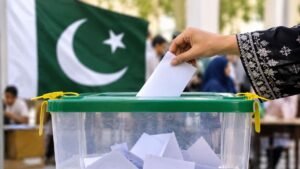
These elections were important because they determined the composition of the National Assembly and provincial assemblies.
The Election Commission established more than 90,000 polling stations and deployed over one million election personnel, according to its 2024 annual report.
However, the elections also raised several questions about electoral transparency and public confidence.
The Commonwealth Observer Group published its final report on the 2024 elections. It highlighted both positive developments and serious concerns.
Major Observations
1. Results Transmission
The shutdown of cellular services affected the digital transmission of election results and reduced transparency.
2. Discrepancies in Results
The observer group identified differences between polling station results forms and constituency-level tabulated results in some cases.
3. Level Playing Field
The report raised concerns about political competition and the ability of political parties and candidates to participate on equal terms.
4. Women’s Participation
The report recognized progress in reducing the gender gap in voter registration.
5. Youth Participation
It also noted increased youth turnout on election day.
6. Political and Civil Rights
The report highlighted concerns about freedom of association, freedom of assembly, and freedom of expression during the electoral process.
The 2024 elections demonstrated that electoral credibility depends on more than election-day arrangements. Political freedom, transparent administration, reliable results, and institutional independence are equally important.
10. Major Problems in Pakistan’s Electoral System
Despite improvements in election laws, several challenges continue to affect the credibility of elections.
1. Political Interference
Political interference can weaken the independence of election institutions and damage public confidence.
2. Allegations of Electoral Rigging
Claims of vote manipulation and irregularities create political uncertainty and weaken trust in election results.
3. Weak Institutional Independence
The ECP must have sufficient administrative, financial, and legal independence to perform its constitutional responsibilities.
4. Low Women’s Political Participation
Women in some areas face social, economic, and cultural barriers to voting and political participation.
5. Delayed Election Disputes
Long delays in resolving election petitions can weaken public confidence and create political instability.
6. Lack of Voter Awareness
Many citizens have limited knowledge of voting procedures, electoral rights, and the importance of their participation.
7. Unequal Political Opportunities
Restrictions on political activity and unequal access to campaign opportunities can affect fair political competition.
8. Weak Election Technology
Digital systems can improve election management, but poor planning, technical failures, and weak cybersecurity can create new problems.
9. Lack of Transparency in Political Finance
Limited transparency in campaign funding and election expenses can create unfair advantages for wealthy candidates and political groups.
11. Recommendations for Electoral Reforms in Pakistan
Pakistan needs practical and long-term reforms to improve its electoral system.
The following recommendations can help strengthen democracy.
1. Strengthen the Independence of the ECP
The Election Commission should have adequate financial, administrative, and constitutional independence.
Its decisions should be respected by all political parties and state institutions.
2. Build Political Consensus
Major electoral reforms should be introduced through consultation and agreement among political parties.
Political consensus can improve the credibility and long-term success of reforms.
3. Improve Transparency in Election Results
The ECP should ensure the timely publication of polling station results and provide easy public access to official election data.
4. Introduce Secure Election Technology
Electronic voting and digital result systems should be introduced only after independent testing, security audits, and successful pilot projects.
5. Strengthen Election Tribunals
Election disputes should be resolved within clear legal timelines.
Tribunals should have adequate resources and independence.
6. Increase Women’s Political Participation
Political parties should encourage women to participate as voters, candidates, polling staff, and political leaders.
The five per cent ticket requirement should be properly enforced.
7. Improve Overseas Voting Arrangements
The government and ECP should develop a secure and practical voting system for eligible overseas Pakistanis.
8. Improve Voter Education
Public awareness campaigns should educate citizens about voter registration, voting rights, and election procedures.
9. Ensure Equal Political Opportunities
All political parties and candidates should receive equal opportunities to campaign and participate within the law.
10. Improve Political Finance Transparency
Political parties and candidates should disclose election expenses and sources of campaign funding in accordance with the law.
11. Strengthen Local Government Elections
Regular local government elections should be conducted to promote political participation and strengthen democracy at the grassroots level.
12. Protect Marginalized Communities
The electoral system should provide accessible voting facilities for women, persons with disabilities, religious minorities, and other underrepresented groups.
12. Importance of Electoral Reforms for Democracy
Electoral reforms are essential for the long-term stability of Pakistan’s democratic system.
Their importance can be understood through the following points:
- Public Confidence: Transparent elections increase public trust in democratic institutions.
- Political Stability: Credible election results reduce political disputes and uncertainty.
- Good Governance: Elected representatives become more accountable to citizens.
- Equal Representation: Reforms provide better opportunities for women and marginalized communities.
- Institutional Strength: An independent ECP strengthens the constitutional system.
- Democratic Continuity: Peaceful transfers of power help strengthen democratic traditions.
- International Reputation: Credible elections improve Pakistan’s image among democratic partners and international institutions.
A strong electoral system is therefore a basic requirement for effective governance and sustainable democracy.
13. Conclusion
Electoral reforms in Pakistan are necessary to strengthen democratic institutions and ensure public confidence in the electoral process.
The Elections Act 2017 provided an important legal foundation by combining different election laws into one framework. Subsequent amendments in 2023 and 2024 further changed several aspects of election administration.
However, legislation alone cannot guarantee credible elections. Political consensus, institutional independence, transparent results, equal political opportunities, and effective dispute resolution are equally important.
The government, Parliament, Election Commission, political parties, media, and civil society must work together to improve the electoral system.
Ultimately, democracy becomes stronger when citizens can freely choose their representatives and trust the process through which their votes are counted.
Frequently Asked Questions (FAQs)
1. What are electoral reforms in Pakistan?
Electoral reforms in Pakistan refer to changes in election laws, institutions, and procedures to ensure free, fair, transparent, and inclusive elections.
2. What is the Elections Act 2017?
The Elections Act 2017 is a comprehensive law that combined several previous election laws into one legal framework. It regulates important aspects of elections in Pakistan.
3. What is the role of the Election Commission of Pakistan?
The ECP conducts and supervises elections, prepares electoral rolls, delimits constituencies, and takes steps to ensure that elections are conducted according to the Constitution and law.
4. Which constitutional article deals with the Election Commission of Pakistan?
Article 218 of the Constitution of Pakistan provides for the establishment and responsibilities of the Election Commission. Article 219 explains its major duties.
5. What is the purpose of Electronic Voting Machines?
Electronic Voting Machines are designed to record votes electronically and support the counting process. Their use requires proper testing, security, and transparency.
6. Can overseas Pakistanis vote in general elections?
The Elections Act 2017 contains provisions relating to overseas voting. However, a practical voting mechanism must be established through appropriate legal and administrative arrangements.
7. When were the last general elections held in Pakistan?
Pakistan’s most recent general elections were held on February 8, 2024.
8. Why are electoral reforms important for Pakistan?
Electoral reforms improve transparency, strengthen institutions, protect voting rights, promote political participation, and increase public confidence in democracy.
9. What are the major challenges facing Pakistan’s electoral system?
Major challenges include political interference, allegations of rigging, unequal political opportunities, weak transparency, delayed election disputes, and low participation among some sections of society.
10. What is the main objective of electoral reforms?
The main objective is to ensure that every eligible citizen can freely cast a vote and that election results reflect the genuine choice of voters.
For CSS and PMS Aspirants: Electoral reforms are an important topic in Pakistan Affairs, Current Affairs, Political Science, and governance-related discussions. Candidates should understand the constitutional framework, Elections Act 2017, role of the ECP, and challenges highlighted by the 2024 general elections.